Natural Farming Challenges: Why Chemical-Free Food Takes More Effort Than Most People Realize
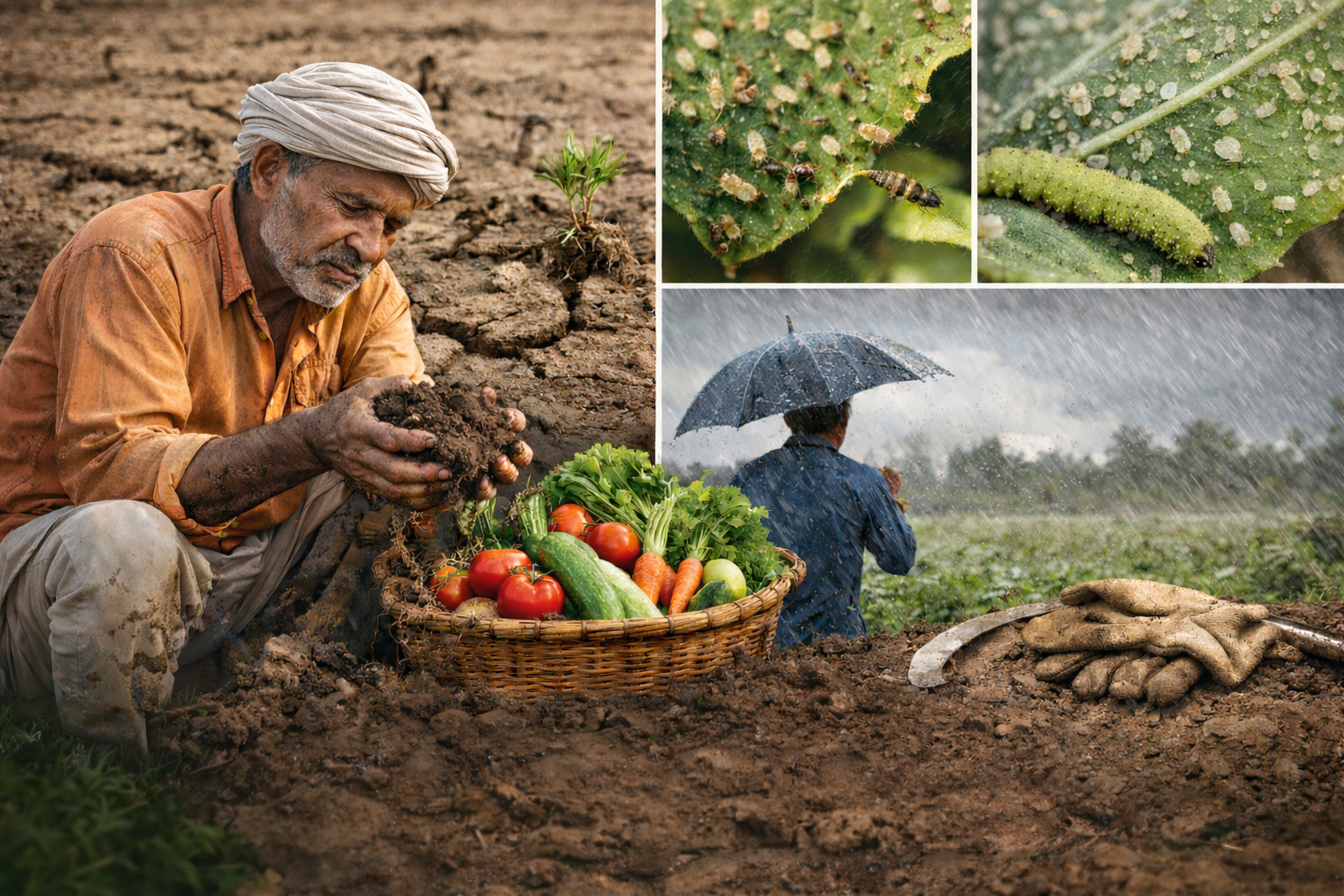
At Arsoli Natural Farm, we often hear a simple question from customers: “Why is naturally grown food more difficult to produce?” The answer is equally simple — natural farming demands patience, discipline, observation, and a deep respect for nature.
Modern chemical farming was designed for speed and large-scale production. Natural farming follows a completely different philosophy. Instead of forcing rapid growth using chemicals, it works with soil health, seasonal cycles, biodiversity, and natural balance. While this approach produces healthier and safer food, it also brings many challenges for farmers.
In this article, we want to share the real challenges faced in traditional natural farming and how we at Arsoli Natural Farm are continuously working to overcome them to deliver clean, chemical-free food to our customers.
Understanding Natural Farming
Natural farming focuses on growing crops without using harmful chemical fertilizers, pesticides, growth stimulants, or artificial ripening methods. The goal is not just producing crops, but preserving soil fertility, protecting water resources, and growing food in a way that supports long-term ecological balance.
At our 10-acre farm in Arsoli, Maharashtra, we grow products like mangoes, jowar, and millets using farming methods that prioritize natural soil nutrition and sustainable practices.
But choosing this path is not always easy.
1. Lower and Unpredictable Yield
One of the biggest challenges in natural farming is lower crop yield, especially during the initial transition period.
In chemical farming, fertilizers provide immediate nutrition to plants, leading to faster growth and higher production. In natural farming, soil health improves gradually over time. Crops depend on natural compost, microbial activity, organic matter, and seasonal conditions.
This means:
- Crop growth can be slower
- Production quantity may fluctuate
- Farmers need more patience before seeing stable results
For small farmers, this can create financial pressure because income becomes less predictable.
How We Are Addressing It
At Arsoli Natural Farm, we focus on improving soil quality consistently instead of chasing short-term production. We use:
- Natural compost and organic matter enrichment
- Crop rotation methods
- Water conservation practices
- Multi-crop farming approaches
Healthy soil gradually becomes more resilient, productive, and capable of supporting better long-term yields naturally.
2. Pest and Disease Management Without Chemicals
Chemical pesticides provide quick control over pests and diseases. In natural farming, farmers avoid these synthetic chemicals, which makes crop protection more challenging.
Weather changes, humidity, insects, fungal infections, and seasonal diseases can severely affect crops if not monitored carefully.
Natural farming requires:
- Continuous field observation
- Manual monitoring of plant health
- Use of traditional pest-control techniques
- Preventive care rather than reactive spraying
This increases labor, time, and operational effort.
How We Are Addressing It
We use natural and preventive farming methods instead of relying on harmful chemical sprays. Our approach includes:
- Maintaining biodiversity on the farm
- Encouraging natural ecological balance
- Improving plant immunity through healthy soil
- Using traditional natural farming practices wherever possible
Healthy ecosystems naturally reduce pest pressure over time.
3. Dependence on Weather and Natural Conditions
Natural farming is closely connected to nature, which means climate conditions directly impact crop quality and production.
Unexpected rainfall, excessive heat, water shortages, or changing seasonal patterns can create major farming difficulties.
For example:
- Mango flowering can be affected by temperature fluctuations
- Excess rain may impact crop quality
- Drought conditions can stress naturally grown crops more severely
Unlike chemical farming, natural farming offers fewer shortcuts to artificially control these situations.
How We Are Addressing It
At Arsoli Natural Farm, we focus heavily on sustainable water usage and soil moisture conservation. We continuously work on:
- Efficient irrigation practices
- Soil moisture retention
- Seasonal crop planning
- Natural soil strengthening
Our goal is to build a farm ecosystem that becomes more resilient year after year.
4. Higher Labor and Time Requirements
Natural farming is labor-intensive.
Without chemical shortcuts, many farming activities require manual effort and careful supervision. Farmers spend more time:
- Preparing natural inputs
- Monitoring crop conditions
- Managing weeds manually
- Maintaining soil quality
- Handling post-harvest processes carefully
This increases operational costs and physical workload.
Modern farming machinery and chemical solutions often reduce labor needs, but natural farming depends heavily on human involvement and attention.
How We Are Addressing It
We believe food quality is worth the extra effort.
Instead of focusing only on mass production, we focus on:
- Careful farming practices
- Better crop handling
- Quality over quantity
- Long-term sustainability
Every crop grown naturally requires dedication, patience, and constant observation.
5. Market Competition and Customer Awareness
One of the biggest struggles for natural farmers is competing with chemically grown produce in the market.
Chemically produced fruits and grains often:
- Look visually perfect
- Grow faster
- Have lower market prices
- Are available in large quantities
Naturally grown food may vary slightly in size, color, or appearance because it grows naturally without artificial enhancers.
Unfortunately, many customers still judge food mainly by appearance instead of nutritional quality or chemical safety.
How We Are Addressing It
We believe customer education is equally important as farming.
Through our website and direct customer relationships, we aim to create awareness about:
- The importance of chemical-free food
- Long-term health benefits of natural farming
- Soil and environmental sustainability
- Supporting responsible farming practices
Our customers are not just buying food — they are supporting a healthier farming ecosystem.
6. Building Trust Takes Time
Today, many products in the market use labels like “organic” or “natural,” which sometimes creates confusion among consumers.
For genuine natural farmers, earning customer trust takes years of consistent effort.
Customers want assurance about:
- Farming practices
- Food quality
- Chemical-free cultivation
- Transparency
Trust cannot be built overnight.
How We Are Addressing It
At Arsoli Natural Farm, transparency is extremely important to us.
We want our customers to know:
- Where their food comes from
- How it is grown
- Why natural farming matters
- What challenges are involved in producing truly chemical-free food
We believe honest farming and long-term customer relationships matter more than short-term sales.
Why Natural Farming Still Matters
Despite all these challenges, natural farming remains one of the most important paths toward healthier food and sustainable agriculture.
Natural farming helps:
- Preserve soil fertility
- Reduce chemical pollution
- Protect groundwater
- Support biodiversity
- Produce cleaner food
- Create a healthier environment for future generations
Most importantly, it brings farming closer to nature again.
Our Commitment at Arsoli Natural Farm
Natural farming is not the easiest path, but we believe it is the right one.
Every season brings new learning experiences, weather uncertainties, operational challenges, and hard work. Yet our commitment remains unchanged — to grow food responsibly and deliver naturally cultivated products to families who value health and sustainability.
From our farm in Arsoli to homes in Pune, Panvel, and beyond, we are proud to continue this journey of producing food with care, honesty, and respect for nature.
When you choose naturally grown food, you are not just choosing better nutrition. You are supporting farmers who are working patiently to protect soil, environment, and long-term food quality for everyone.
Thank You for Supporting Natural Farming
Your support encourages small farms like ours to continue sustainable agricultural practices and preserve traditional farming values.
Together, we can build a healthier and more sustainable future — one farm, one crop, and one meal at a time.
Comments
- Vinayak Ronge, Pandharpur
Great Article, very well articulated. Its always a big challenge to follow natural farming practices. I have one question and need some guidance from you. What alternatives you use for pesticides?
Add a comment
Comments are reviewed before they appear. Your name and message will be shown here after approval.